• Unit 1203, No. 38, 12th floor, Hamila commercial office tower Hamila boulevard, Pounk, Tehran, Iran

How Temperature Affects Geomembranes

How Temperature Affects Geomembranes

How Temperature Affects Geomembranes

Geomembranes are widely used as advanced waterproofing and environmental protection liners due to their durability, flexibility, and chemical resistance. They are engineered to remain thermally stable under various conditions. However, temperature fluctuations — especially extreme heat, cold weather, and freeze–thaw cycles — can significantly impact geomembrane performance and long-term durability.

When selecting the right geomembrane for a project, it is essential to consider climate conditions, expected temperature ranges, and manufacturing quality.

Below are the key ways temperature impacts geomembranes:

1️⃣ Mechanical Performance in High and Low Temperatures

Temperature variations directly influence the mechanical properties of geomembranes:

  • High temperatures may soften the liner, reducing tensile strength and tear resistance.
  • This can increase the risk of punctures and mechanical damage.
  • Low temperatures can make geomembranes stiffer and more brittle, increasing the likelihood of cracking or tearing.
  • Proper material selection is critical for projects located in regions with extreme climates.

2️⃣ Thermal Expansion and Contraction

Geomembranes expand when exposed to heat and contract in cold conditions.

This movement can lead to:

  • Wrinkling
  • Dimensional changes
  • Stress on anchor trenches and seams

Designing with thermal movement in mind ensures long-term system stability.

3️⃣ Seam Integrity Under Temperature Changes

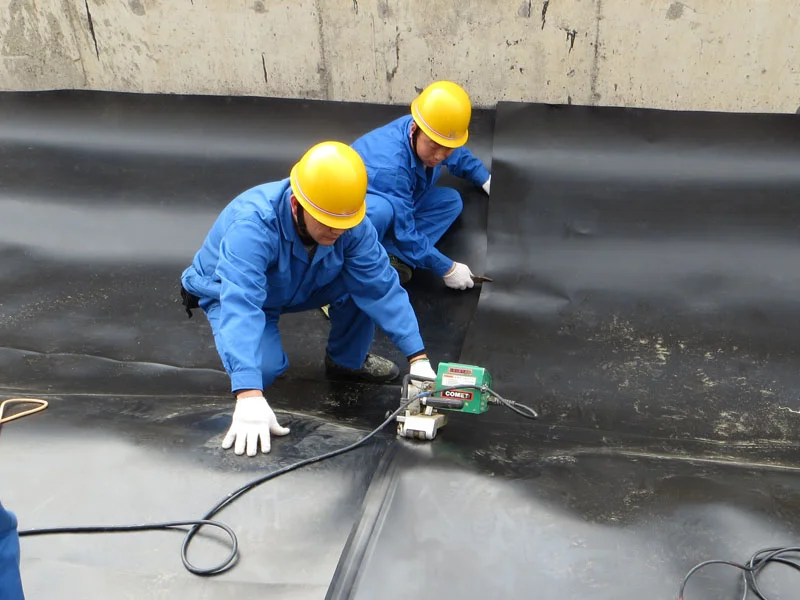
Geomembranes are typically installed using heat welding or extrusion welding techniques.

Temperature fluctuations can affect seam performance:

  • High heat may soften welded areas, potentially weakening seam strength.
  • Extremely low temperatures can make seams rigid, increasing the risk of separation or cracking.

Quality welding procedures and proper temperature control during installation are essential for maintaining seam durability.

4️⃣ Chemical Resistance at Different Temperatures

Chemical resistance can vary depending on temperature. Some chemicals become more aggressive at higher temperatures, which may reduce the liner’s resistance in specific applications.

Industrial facilities, power plants, and wastewater treatment systems should carefully evaluate operational temperature conditions before selecting a geomembrane type.

5️⃣ Long-Term Durability and Freeze–Thaw Cycles

Repeated exposure to temperature extremes and freeze–thaw cycles can accelerate polymer aging.

Over time, this may reduce flexibility, strength, and overall service life. Choosing a geomembrane formulated for UV stability and thermal resistance significantly improves longevity.

Best Geomembrane Types for Cold or Variable Climates

Selecting the right material is crucial for maximizing performance.

✅ HDPE (High-Density Polyethylene)

  • Excellent chemical resistance
  • High tensile strength
  • Ideal for landfills, reservoirs, and heavy-duty industrial applications
  • Performs well in most climates but can become stiffer in extreme cold

✅ LLDPE (Linear Low-Density Polyethylene)

  • Greater flexibility than HDPE
  • Better performance in low temperatures
  • Suitable for uneven subgrades and areas with ground movement

✅ EPDM

  • Exceptional flexibility
  • Excellent performance in cold weather and freeze conditions
  • Commonly used for exposed ponds and harsh climate environments
  • Selecting the right material is crucial for maximizing performance.
  •  

How to Minimize Temperature Effects

  • Select the appropriate thickness and material formulation
  • Use UV-stabilized and thermally resistant compounds
  • Ensure professional welding and installation
  • Perform routine seam testing and inspections
  • Account for thermal expansion during design

Proper design, material selection, and installation practices ensure optimal geomembrane performance even under extreme temperature variations.

Post a comment

Your email address will not be published.