Site handover guide | For contractors, inspectors and project owners
Inspect and document subgrade preparation before deploying a geomembrane. The sheet does not correct unsuitable ground conditions. This checklist clarifies responsibilities, areas requiring correction and handover records. Compaction values, slopes, protection layers and drainage details must come from the approved project design.
Provide the installation team with the latest plans, sections, product specifications and anchorage details. Record discrepancies between drawings and actual conditions before installation begins. A verbal change to slope or outlet location may change quantities, panel arrangements and the installation schedule. Identify the decision-maker and revised document number for every change.
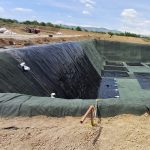
Prepare the surface beneath the sheet to project specifications and remove damaging materials. Mark sharp stones, roots, debris, voids, soft spots and local irregularities during inspection. Report standing water, machinery movement or erosion to the responsible technical specialist. Engineering assessment determines whether soil correction, protection layers or groundwater control measures are needed.
| Inspection subject | Required record or action |
|---|---|
| Geometry and levels | Compare the final survey with drawings and record differences |
| Surface and materials | Record sharp objects, voids, unsuitable soil and corrective results |
| Subgrade compaction | Check test reports required by project specifications |
| Surface water and groundwater | Record observed conditions and approval of the specified solution |
| Perimeter anchorage | Check location and section against approved details |
| Inlets and outlets | Check structure positions and readiness of sealing details |
If the design requires geotextile or another supplementary layer, check its type, condition and installation. A protection layer does not automatically make any subgrade acceptable. Resolve every nonconformity before covering the surface. Further articles on geotextiles and installation mistakes are available in the site archive.
Compare pipe penetrations, concrete connections and geometry transitions on drawings and on site. These locations need dedicated details. Do not determine anchor trench dimensions or sealing methods simply by copying another project. Record the detail drawing number and approver in the checklist so the installer has a clear basis.
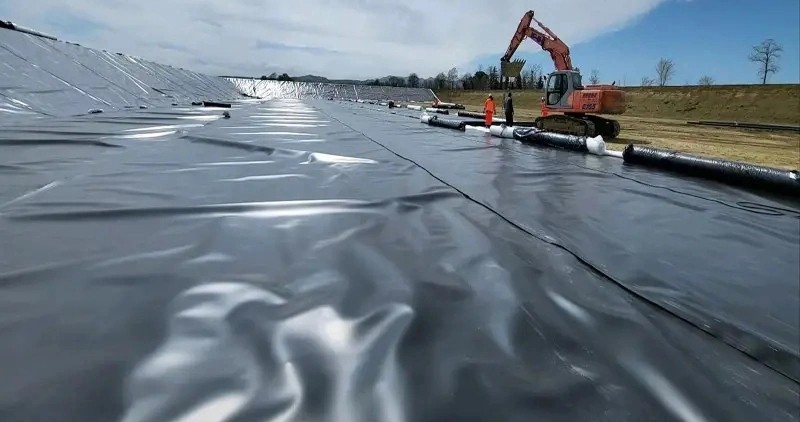
After subgrade approval, identify traffic routes, roll unloading locations and machinery access limits. Reinspect if rainfall or other work takes place between handover and installation. Previous approval does not cover a changed surface condition. Coordinate the schedule so prepared areas are not left unprotected for an indefinite period.
Include the project name, date, accepted area, drawing revision, inspection results, defect list and photographs. Assign a responsible party and reinspection deadline for open items. A general statement that “the subgrade is ready” has limited traceability without defined boundaries and supporting records. Give each work front a separate identifier when the site is divided into stages.
| Minutes item | Suggested information |
|---|---|
| Scope | Floor, side slopes and work-front identifier |
| Inspection basis | Approved drawing and technical specification references |
| Nonconformity | Description, location, photograph and corrective action |
| Final status | Accepted / correction required / reinspection |
| Approval | Names and signatures of authorized contractual representatives |
Is geotextile always required? Its necessity and specifications depend on subgrade conditions and the designed system. One answer for all projects is inaccurate.
Can installation start immediately after rain? Reassess the subgrade and welding conditions and obtain approval under the project procedure.
Who hands over the subgrade? Define the roles of the owner, earthworks contractor, installer and inspector in the contract and quality control plan.
Send the drawings, project location, application and required specifications to the sales team at Polyethylene Gostaran Alborz so that a product supply proposal with a clear scope can be prepared. Project specialists are responsible for design and installation details.
Contact PEGA for consultation and a quotation
See also the pond installation cost guide.
NRCS, Practice 521, 2017 edition, for subgrade and protection layer principles. This source does not replace approved project specifications or local requirements.