Technical selection guide | For process teams, consultants and project owners
Selecting a geomembrane for an industrial wastewater pond cannot be finalized from the industry name or pH alone. Fluid composition, chemical concentrations, temperature and exposure duration must be assessed alongside mechanical conditions and installation details. This guide identifies the information needed before requesting quotations and approving a product.
Record process information and laboratory results in a shared data sheet. Distinguish normal conditions, likely maxima and abnormal operating conditions. Equipment wash water or a change in feedstock may create conditions different from a routine daily wastewater sample. Record the sampling date and establish whether the sample represents actual operation.
Wastewater streams with similar pH may have different compositions. Claims such as “chemical resistant” must therefore refer to a specific product and defined exposure conditions. General compatibility charts can assist initial screening, but do not replace assessment of the proposed product under actual project conditions. Ask the supplier to document the application range, limitations and basis for its recommendation.
EPA SW-846 Method 9090A was developed to examine how contact between waste and a membrane liner affects the liner’s physical properties. The assessment compares samples before and after exposure. The responsible technical specialist must define the test program, exposure conditions and interpretation; naming a test method in a report does not automatically approve every application.
Ask which product and formulation the tested sample represents, how closely the test liquid resembles your wastewater, and what temperatures and exposure periods were used. Do not apply results for another product or different conditions to your project without technical review.
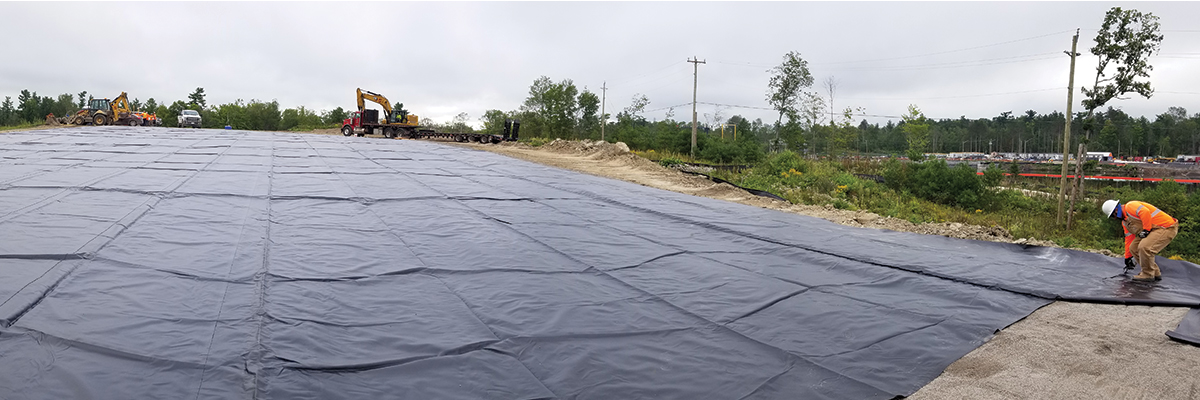
The sheet is only one system component. The subgrade, protection layer, pipe penetrations, structural connections, anchorage and, where required, drainage and leak monitoring must be designed together. Increasing thickness alone does not resolve chemical incompatibility or unsuitable connection details. Cleaning procedures and equipment access must also protect the liner.
Summarize verbal answers in meeting minutes or a technical appendix. Refer also to the seam quality control guide when preparing a handover package.
After commissioning, do not treat changes in wastewater composition, temperature or cleaning chemicals as merely routine operational adjustments. Compare new information with the conditions used to select the liner. Assign responsibility for recording changes, reviewing documents and issuing technical opinions from the outset, so decisions do not depend on individual memory.
Is one thickness suitable for all wastewater? Thickness and product type must follow design specifications and exposure conditions; a general recommendation is insufficient for every pond.
Can a test report for another product be used? Only after reviewing how the product, liquid and test conditions relate to the project. Automatic transfer of results is unreliable.
What if wastewater composition is still unknown? First complete the necessary process information and sampling, and state temporary assumptions explicitly in the quotation request.
Send the drawings, project location, application and required specifications to the sales team at Polyethylene Gostaran Alborz so that a product supply proposal with a clear scope can be prepared. Project specialists are responsible for design and installation details.
Contact PEGA for consultation and a quotation
EPA — SW-846 Test Method 9090A, for the purpose of waste and membrane liner compatibility testing. The checklists in this article are suggestions and must be adapted to each project’s design and conditions.