• Unit 1203, No. 38, 12th floor, Hamila commercial office tower Hamila boulevard, Pounk, Tehran, Iran

The Essential Guide to Geomembrane Welding: Methods, Tools, and Best Practices

The Essential Guide to Geomembrane Welding: Methods, Tools, and Best Practices

Why Is Geomembrane Welding Important?

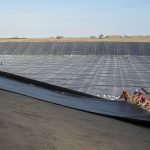
The main purpose of welding geomembranes is to create a continuous, impermeable lining that prevents the movement of liquids or gases. Through thermal or chemical bonding, the sheets are fused at a molecular level—eliminating weak spots or gaps that could lead to leakage.

This technique is essential in containment systems like fish ponds, landfills, mining pits, or wastewater treatment plants. A properly welded geomembrane resists mechanical stress, temperature changes, and aging, reducing maintenance costs and extending the life of the installation.

Common Welding Tools Used for Geomembranes

Various tools are used in geomembrane welding, each designed for specific materials and welding conditions:

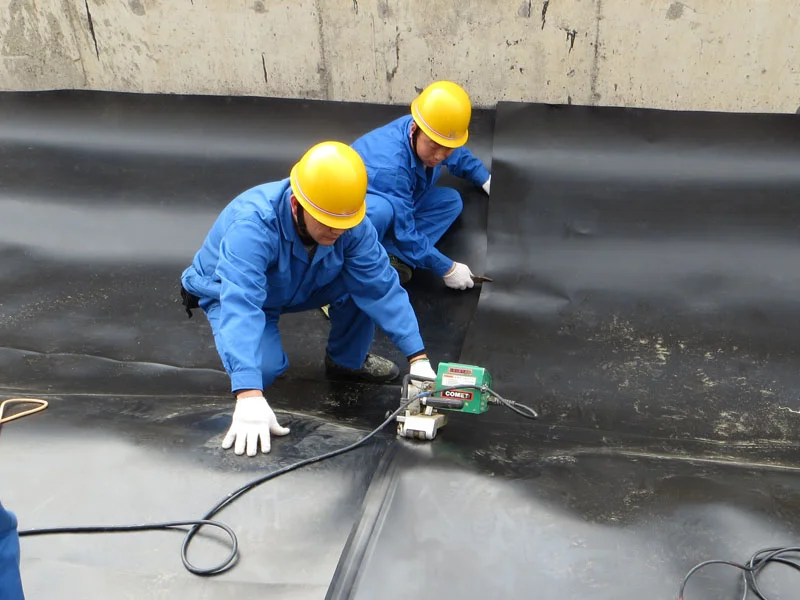
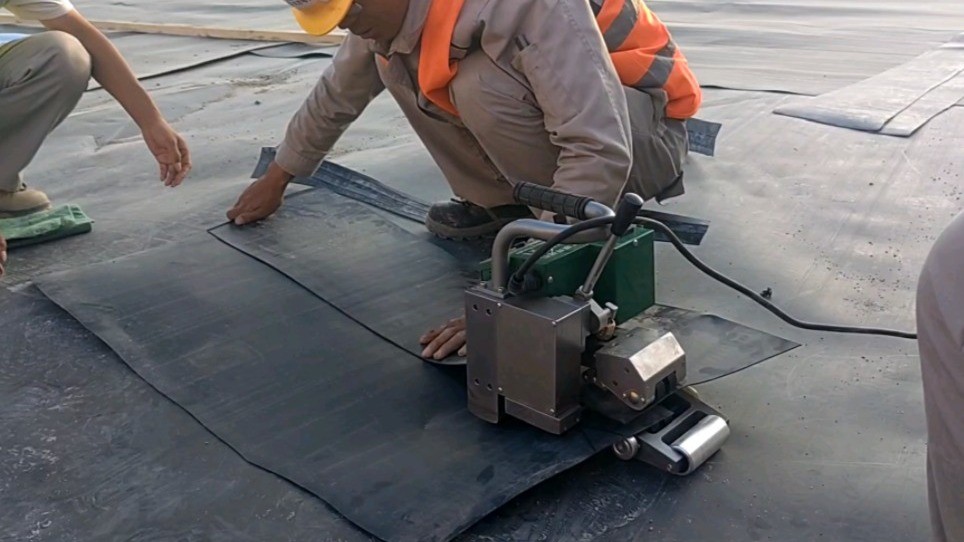
  • Hot Wedge Welders: These machines use a heated metal wedge to melt the surface of the geomembrane. Pressure is then applied to bond the sheets. Ideal for HDPE and LLDPE liners, especially in large-scale installations like landfills or reservoirs.
  • Hot Air Welders: By directing hot air at the joining edges, this tool softens the membrane surfaces, which are then pressed together using rollers. Suitable for thinner or flexible materials like PVC and for small repairs.
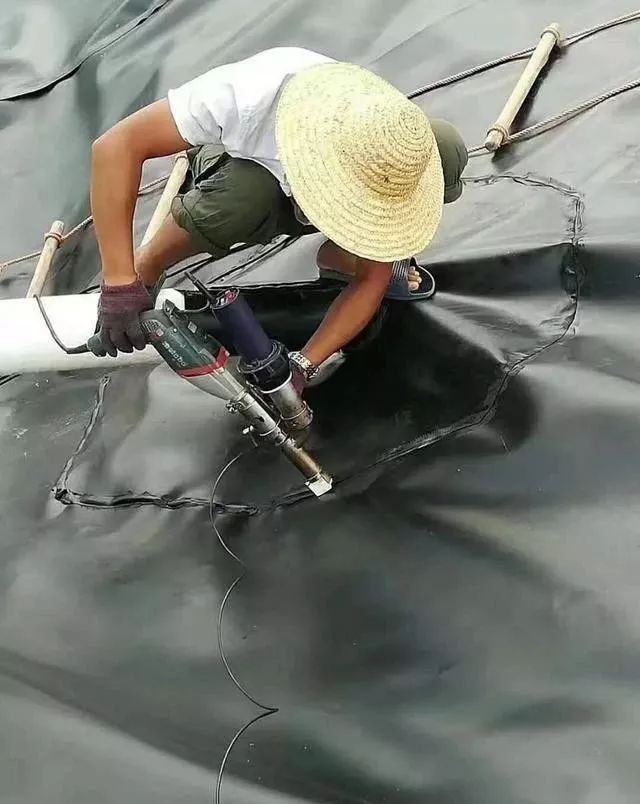
  • Extrusion Welders: These tools melt and extrude a plastic rod (made of the same resin as the membrane) into the seam. They are used for corner joints, pipe penetrations, and repair patches requiring additional material strength.
  • Vibrating Knife Cutters: Although not a welding tool, these devices cut geomembranes precisely before welding. Clean, accurate cuts improve welding quality, especially in complex shapes or custom layouts.

Key Steps in the Geomembrane Welding Process

1- Surface Preparation

  • Ensure the work area is dry, clean, and free of debris.
  • Align sheets with an overlap of 50–100 mm depending on the chosen welding technique.
  • Remove dust, oil, or moisture from the seam area.

2- Select the Appropriate Welding Method

  • Hot Wedge Welding: Preferred for thick geomembranes (HDPE, LLDPE). Offers high strength and dual-track seams suitable for air testing.
  • Hot Air Welding: Best for flexible liners like PVC. Commonly used in small-scale applications or repairs.
  • Extrusion Welding: Ideal for reinforcing joints or fixing damaged sections.

3- Quality Testing

  • Visual Inspection: Ensure seams are uniform and fused along their entire length.
  • Air Channel Test: For double-track welds, compressed air is introduced to check for leaks.
  • Vacuum Box Test: Soapy water and vacuum pressure help detect holes in single-track welds.
  • Destructive Testing: Shear and peel strength tests are conducted on sample cuts using field tensiometers.

4- Documentation & Repair

  • Record all welding parameters: temperature, pressure, and speed.
  • Any defects must be repaired immediately—typically with extrusion welding.

Factors That Affect Welding Quality

Environmental Conditions:

  • Temperature: Optimal welding temperature is between 5°C and 40°C. Extreme cold makes membranes brittle, while excessive heat can damage them.
  • Wind: Strong winds may cool the weld area too quickly. Use windbreaks when needed.
  • Humidity: Moist surfaces interfere with bonding. Always weld on dry liners.

Surface & Alignment:

  • Clean the joining edges thoroughly.
  • Align overlaps precisely and maintain even pressure across the seam.

Machine Settings:

  • Adjust heat, pressure, and speed based on the material type and thickness.
  • For example, HDPE welds typically require 200–450°C, while PVC welds require less heat.

Equipment Condition:

  • Use well-calibrated, high-quality machines.
  • Ensure stable power supply and keep spare parts (nozzles, wedges) available.

Operator Skills:

  • Trained personnel are critical. Conduct test welds before beginning full operations.
  • Knowledge of different membranes and welding techniques improves performance and reduces the risk of failure.

Conclusion

Geomembrane welding is more than just a technical task—it’s a critical process that ensures the structural and environmental reliability of containment systems. By selecting the right tools, applying correct methods, and maintaining strict quality control, you can achieve long-lasting, impermeable seams. Whether you’re working on a landfill, fish pond, or chemical storage site, investing in skilled operators and the proper equipment will ensure safe and durable results.

Source


Post a comment

Your email address will not be published.